
Protecting a shallow, biodiverse coral lagoon in southern Mauritius
(Supported by the US Embassy)
Project Overview: A unique shallow-water coral refuge on the southern shore
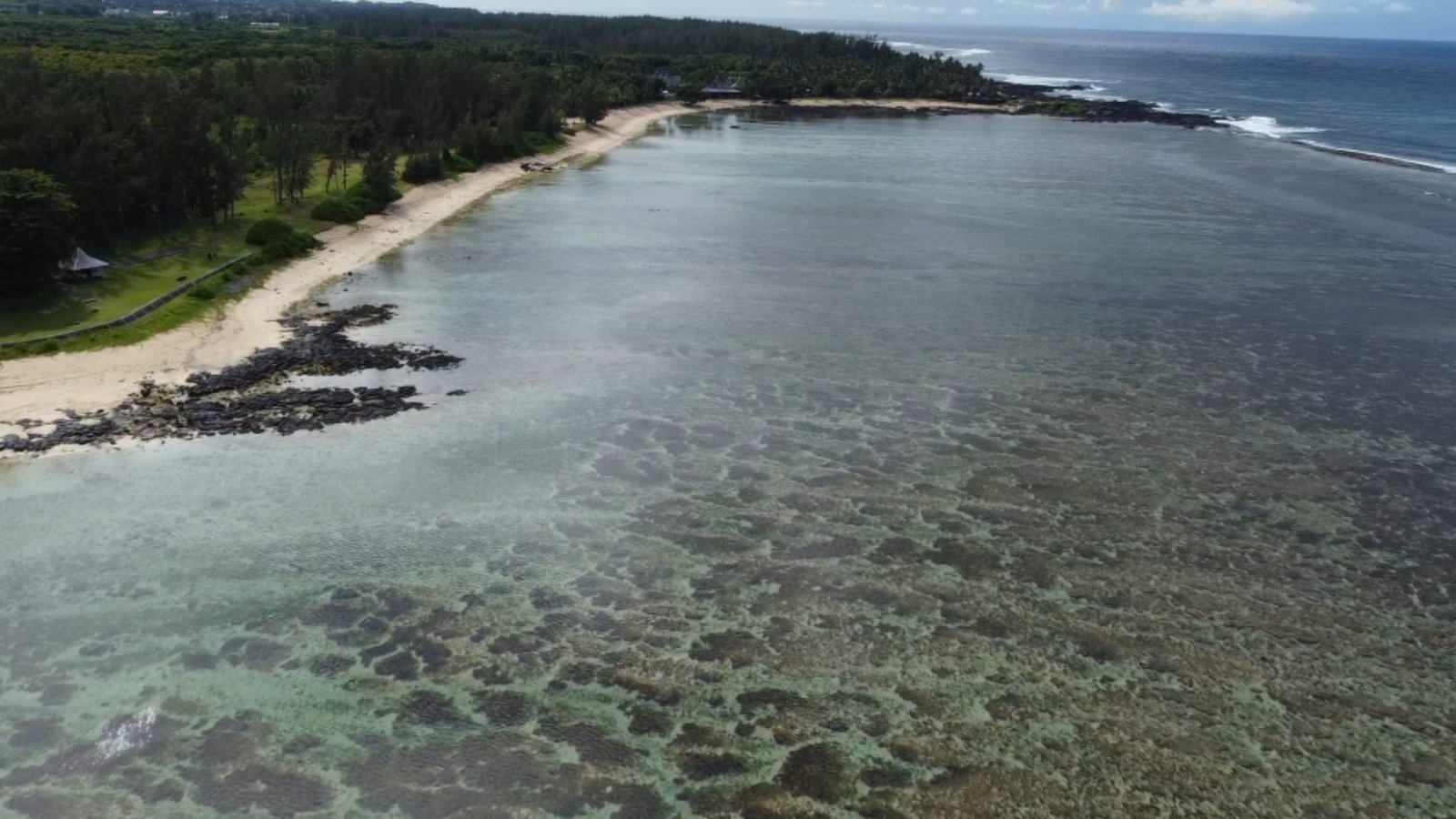
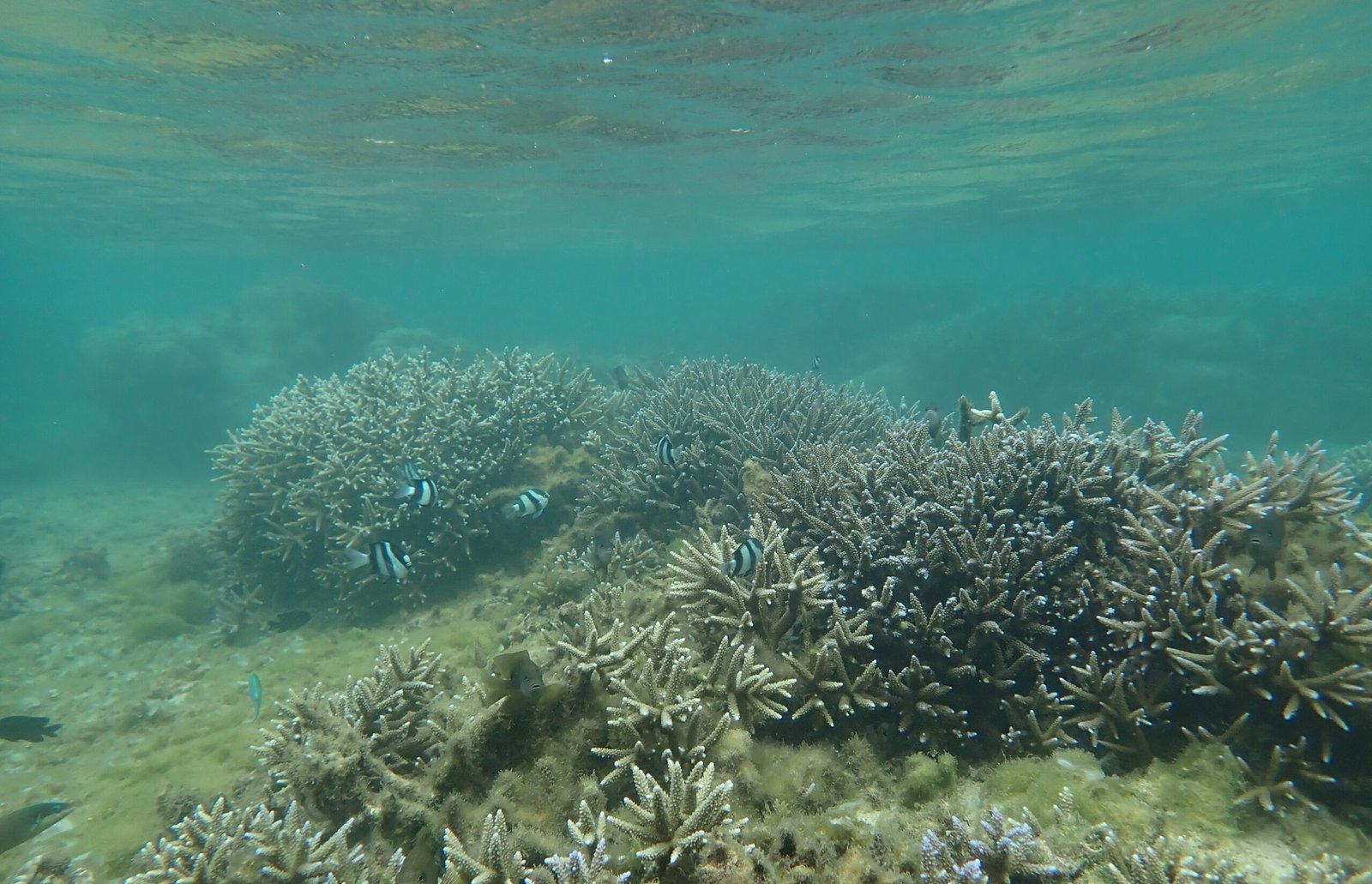
Nestled on the southern shores of Mauritius, the St Felix lagoon is known for its unusual shallow coral ecosystem, brimming with biodiversity. Coral Garden Conservation established a Voluntary Marine Conservation Area (VMCA) here in 2020 to safeguard and nurture the coral patches within this vital habitat. Covering approximately 4.15 hectares, the VMCA harbours a remarkably diverse assemblage of fishes and corals. Despite its secluded position within the lagoon, it benefits from a natural water channel that ensures excellent water quality and visibility — conditions that are crucial to the health of its reefs. The work carried out within the VMCA — regular biological checks, coral bleaching monitoring, Crown-of-Thorns Starfish (COTS) surveillance, coral farming and reef restoration, coastal and marine clean-ups, and community engagement — reflects CGC's long-term commitment to preserving the marine biodiversity of St Felix.
A naturally flushed lagoon of disproportionate ecological value
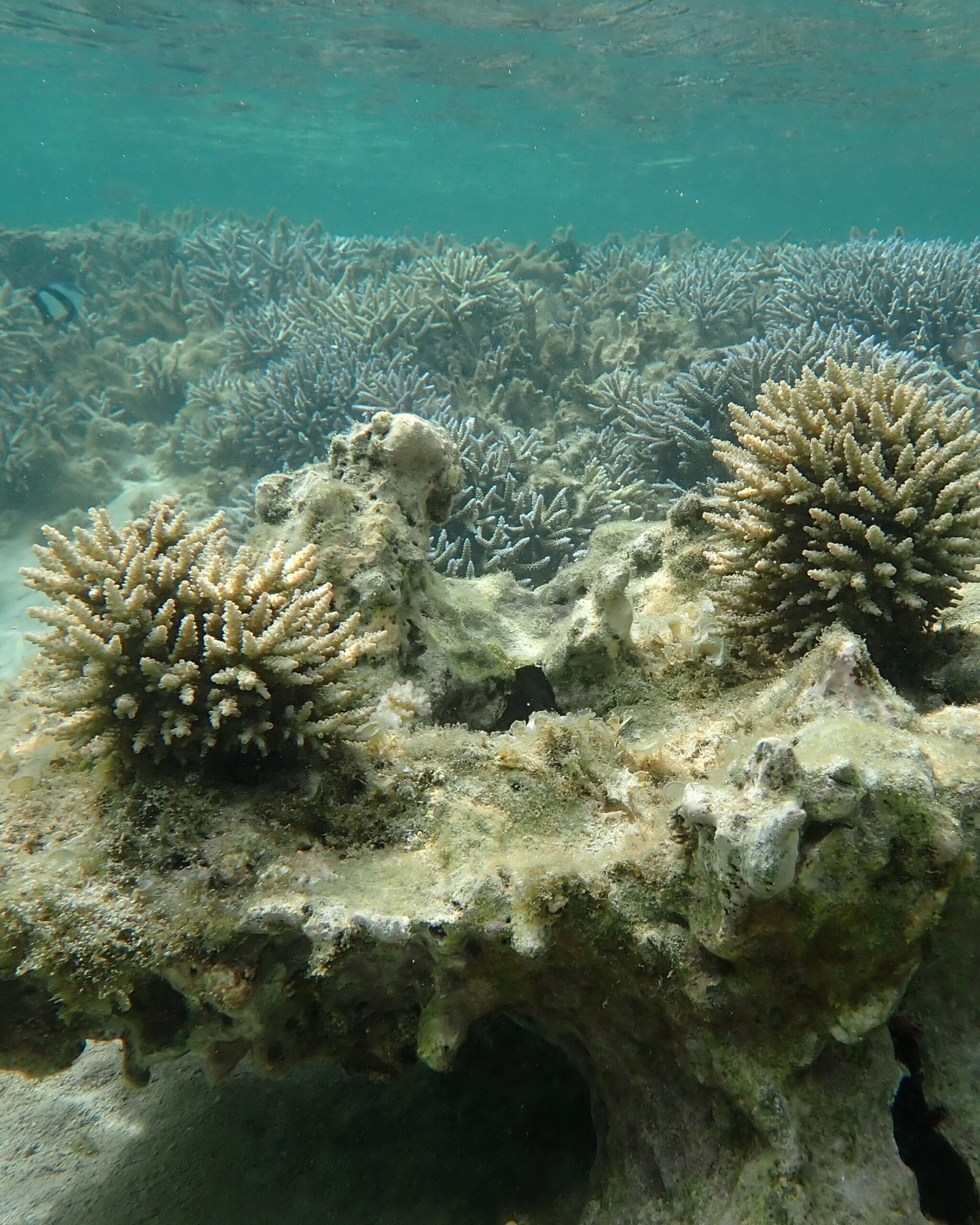
Although the VMCA sits within a relatively closed lagoon — the nearest reef opening lies about 1.3 km away at Rivière des Galets — a small natural channel known locally as the "fausse passe", in front of the St Felix public beach, allows considerable exchange of water between the lagoon and the open sea. This constant flushing keeps the lagoon's physico-chemical water quality high and the underwater visibility clear, creating ideal conditions for coral growth. The same shallow character that makes St Felix special also restricts boat navigation through its dense coral patches, sparing the reef from much of the heavy traffic seen elsewhere. It is this combination of clear, well-flushed water and limited disturbance that allows such a rich coral and fish community to persist in water often less than a metre deep.
Our Goal: Protect and restore St Felix's coral ecosystem — with the community, not just around it
- 4.15 ha lagoon protected
- 48 coral species inventoried
- +66 reef fished observed
- +300 m2 reef restored
- + 600 coral fragments transplanted
- + 70 COTS culled
- + 25 community members trained
Coral Restoration at St Felix: CoralCommUNITY — reviving the reef, fragment by fragment
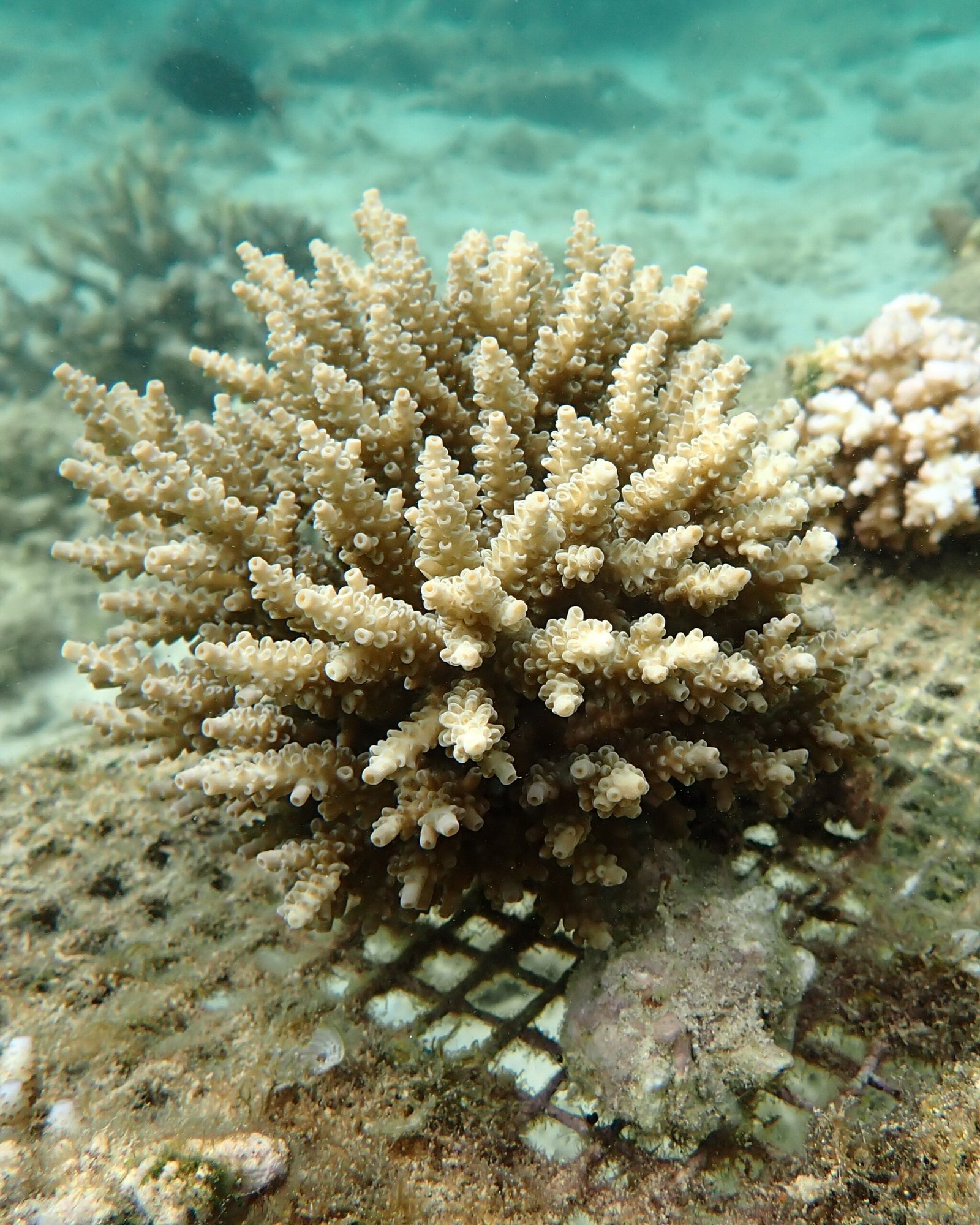
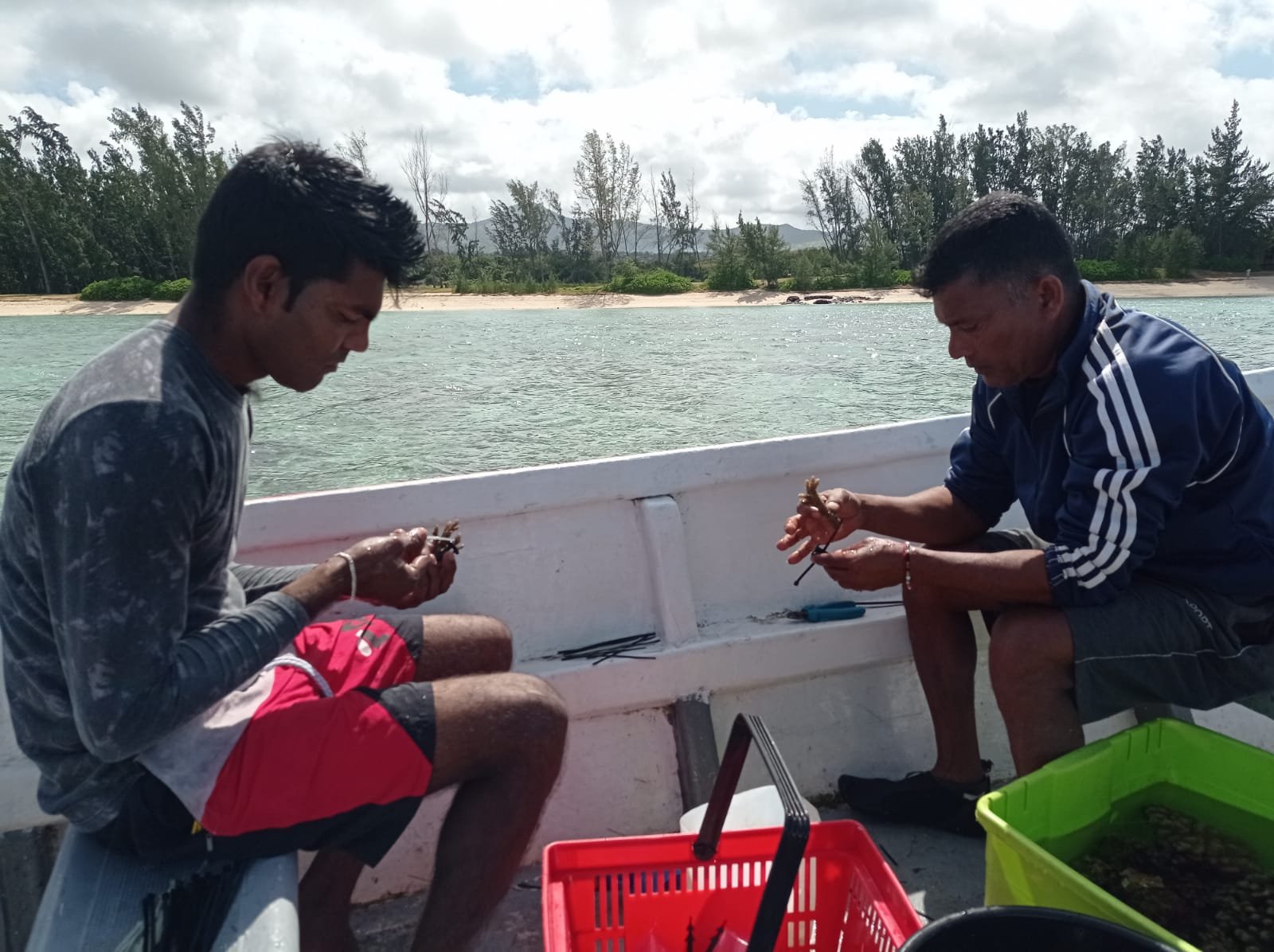
In 2024, with support from the MOL Charitable Trust, CGC launched the CoralCommUNITY project to collect and restore Corals of Opportunity (CoPs) — coral fragments broken loose by storms, waves or human activity — before they are smothered by sediment. Rather than letting these fragments die, the project gives them a second life on nurseries and degraded reef sites.
- Two table nurseries were established and populated with rescued CoPs, where fragments grow in a protected setting until they reach a size suitable for transplantation.
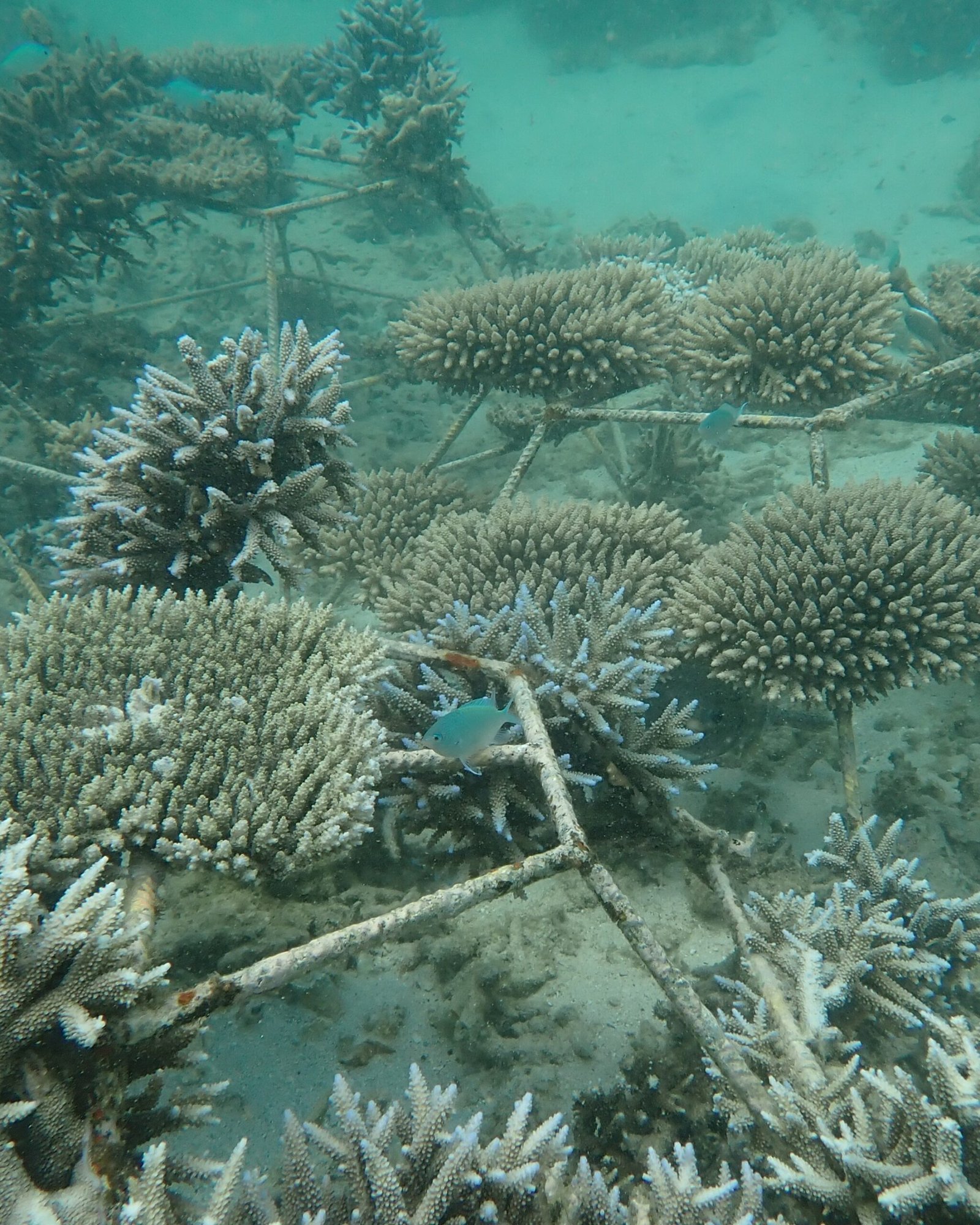
- Ten metal "spider frame" coral gardens were deployed across the lagoon, each carrying around 30 fragments and adding three-dimensional structure for fish and invertebrates.
- 600 nursery-grown fragments were transplanted to degraded reef using underwater drill and epoxy cement, coral clips and nails, and stabilisation modules.
Community at the heart of restoration
Restoration at St Felix has always been a community endeavour. Five local fishermen were trained and employed in coral farming techniques, and twelve sensitisation meetings reached more than 120 residents across St Felix and Rivière des Galets. By turning lagoon users into reef stewards, the project builds the local ownership that long-term conservation depends on. To date, the project has restored over 250 m² of reef while delivering real skills and part-time income to the coastal community.
Monitoring through a bleaching year
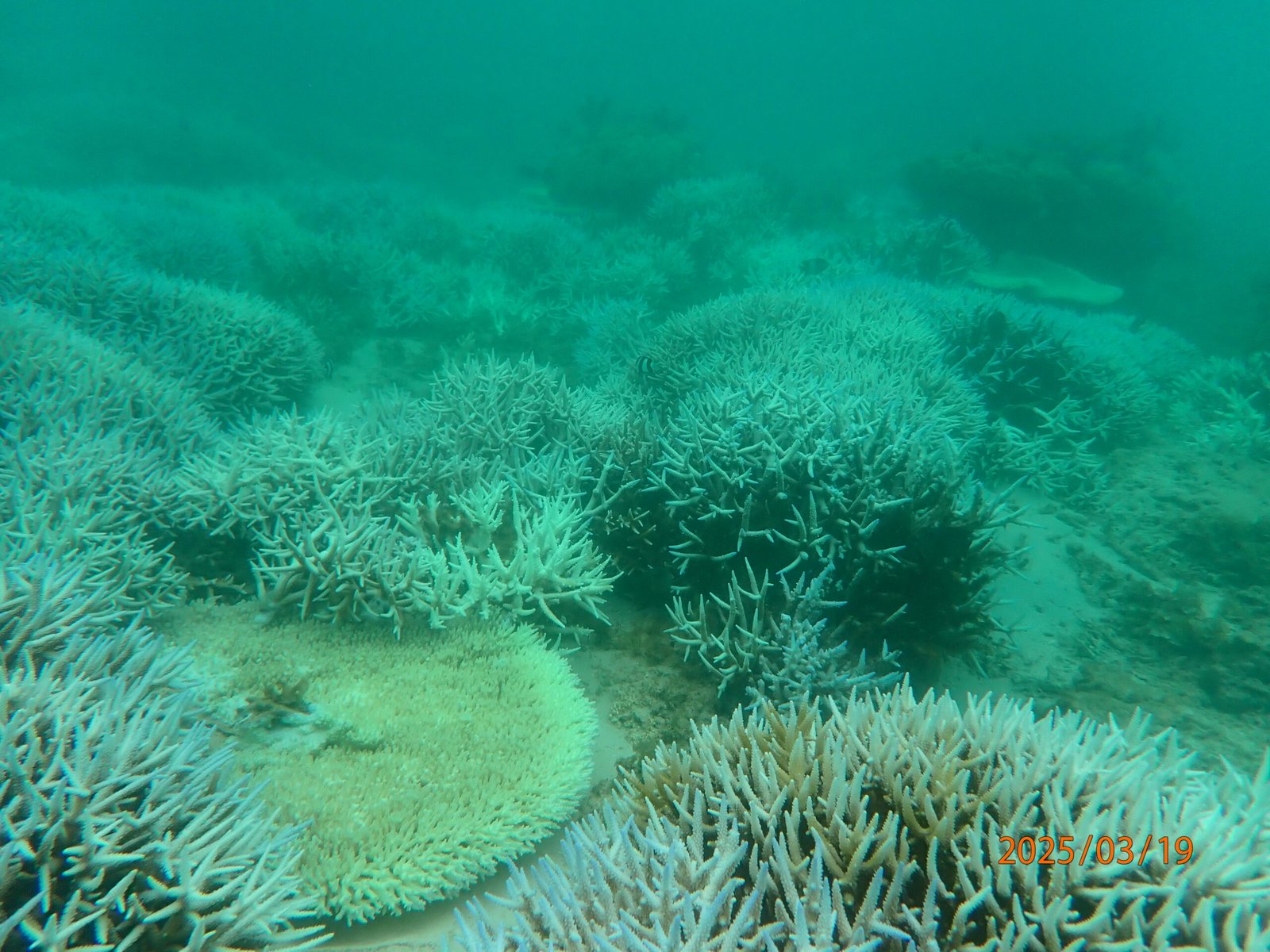
By December 2024, coral survival exceeded 70% in both nurseries and spider frames, and reef fish counts had climbed from just six species to more than 22. The island-wide bleaching event of 2025 then tested the reef hard: roughly half of the nursery and spider-frame corals were lost, and around 80% of wild colonies bleached across Mauritius. Survival held at about 50% — a sobering reminder of why resilient, actively managed VMCAs matter, and why monitoring continues at permanent stations within St Felix.
Marine Guardianship Through Technology:
ROV-based COTS surveillance & control programme
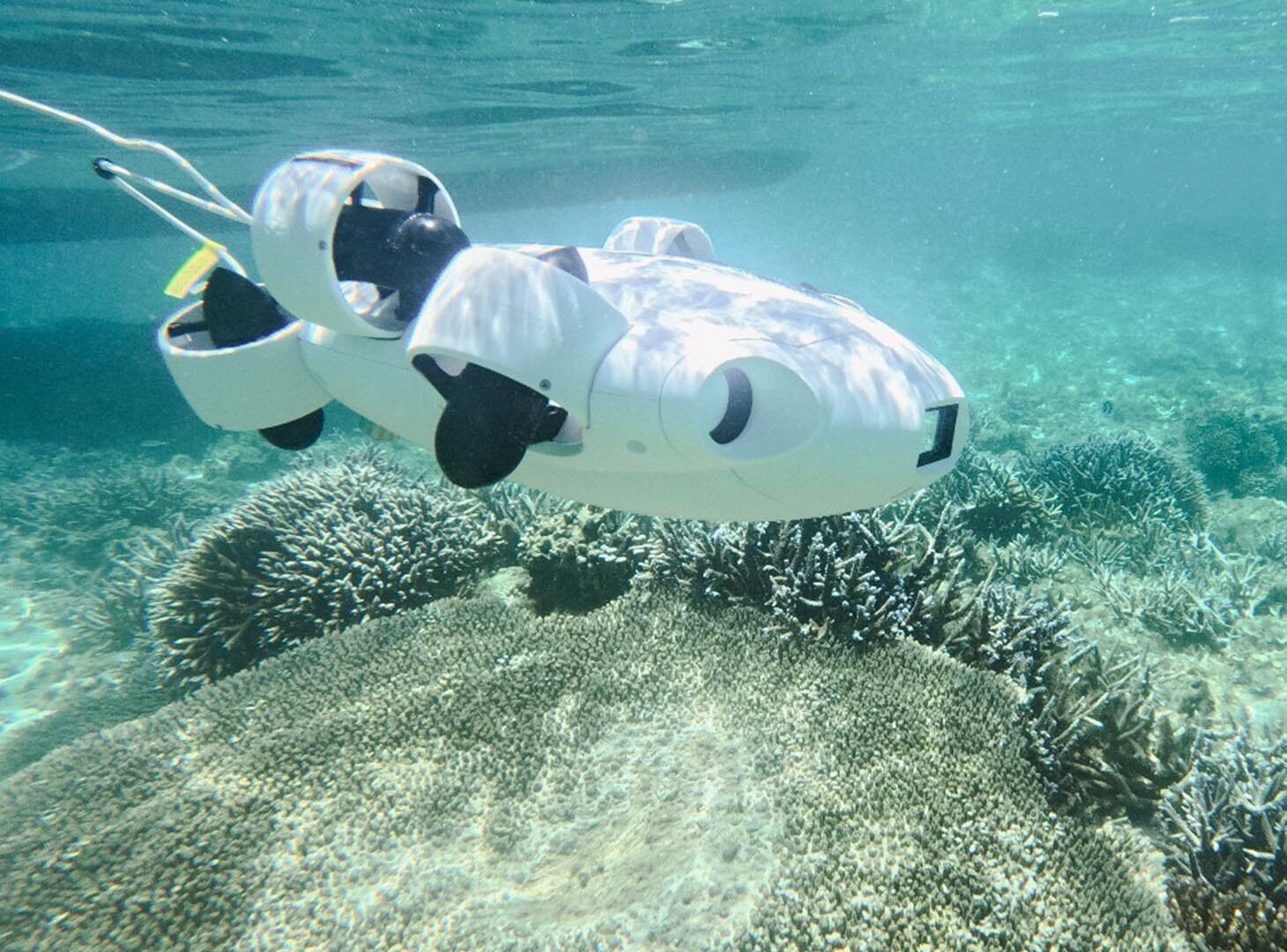
In 2024, under the VARUNA AMP microproject programme, CGC acquired a QYSEA FIFISH V-EVO underwater drone (ROV) — a major milestone for innovative marine conservation in Mauritius. The ROV is used to monitor COTS populations within the St Felix VMCA, supported by purpose-built protocols and standard operating procedures. By replacing many diver-based surveys, the ROV lets the team work with greater precision and a far smaller ecological footprint, while capturing detailed video and photographic evidence of reef condition.
- Regular spot checks and real-time data on COTS across the VMCA
- Reduced reliance on human divers, with high-resolution imagery
- Navigation and data capture in complex, shallow reef terrain
- Faster, better-informed decisions to control COTS outbreaks
Site Sensitivities - The pressures the VMCA is designed to address
St Felix is special, but it is not invulnerable. The VMCA framework exists to detect these pressures early and respond before they escalate.
Crown-of-Thorns Starfish: Outbreaks of Acanthaster sp. can cause rapid, large-scale coral mortality. Routine ROV and diver surveillance, backed by trained control teams, keeps densities in check.
Coral bleaching & climate stress: The 2025 island-wide bleaching event hit the shallow St Felix lagoon hard. Permanent monitoring stations track thermal stress so action can be targeted where it matters.
Shallow winter tides: Very low tides in the winter season expose corals to heat and air, adding stress in an already shallow lagoon — a key reason nursery designs were adapted for St Felix.
Predation & physical damage: Corallivores such as parrotfish and Drupella snails, together with storm and wave damage, continually break and stress colonies — the very fragments restoration rescues.
A Model for Replication - More than a single intervention
The VMCA St Felix is a practical, replicable model of how marine conservation can be built with communities, not merely around them. By weaving together ecological science, coral restoration, ROV-based surveillance, community training and visible on-site protection, the project lays the groundwork for stronger stewardship of the St Felix lagoon — and offers a template for other vulnerable coastal areas across Mauritius and the wider Western Indian Ocean. As threats to coastal ecosystems continue to grow — from climate-driven bleaching to COTS predation — community-led initiatives like this one will be essential for safeguarding Mauritius's natural heritage and strengthening resilience for future generations.
Call-to-action
Protecting coral reefs means protecting biodiversity, livelihoods and climate resilience. Coral Garden Conservation is committed to expanding community-based marine conservation in Mauritius through science, education, restoration and local stewardship. Want to learn more, partner with us, or support our work?
Want to learn more, partner with us, or support our work? Contact us or explore our latest conservation projects.
