
Coral growth, survival and new life at our restoration sites
We are proud to share some very encouraging news from our coral restoration work at St Félix.
On 21 August 2026, our team returned to the coral nurseries and restoration sites within the St Félix lagoon to assess the condition of the corals that have been nurtured and transplanted through our community-based reef restoration programme. What we observed underwater was extremely encouraging. Across the nurseries and restoration sites, many of the corals are not simply surviving—they are growing, branching, establishing themselves on the reef and progressively creating the three-dimensional structure of living coral habitat. Even more exciting was the observation of new juvenile coral recruits within the nursery area, providing an encouraging indication that the restoration structures are becoming integrated into the surrounding reef environment. For us, these observations represent an important milestone in the journey from rescuing coral fragments to rebuilding functioning reef habitat.
🌱 Coral nurseries: from small fragments to growing colonies
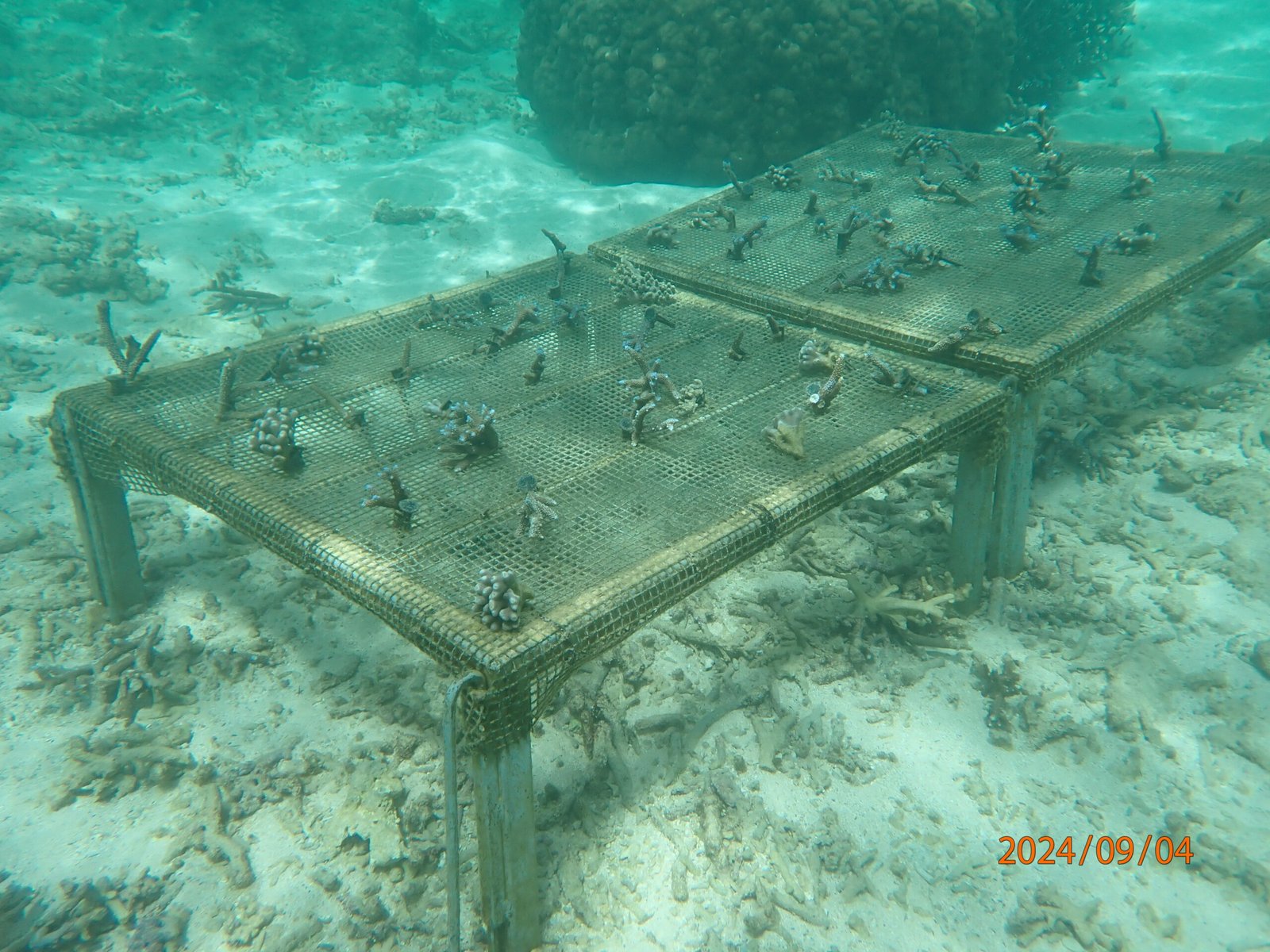
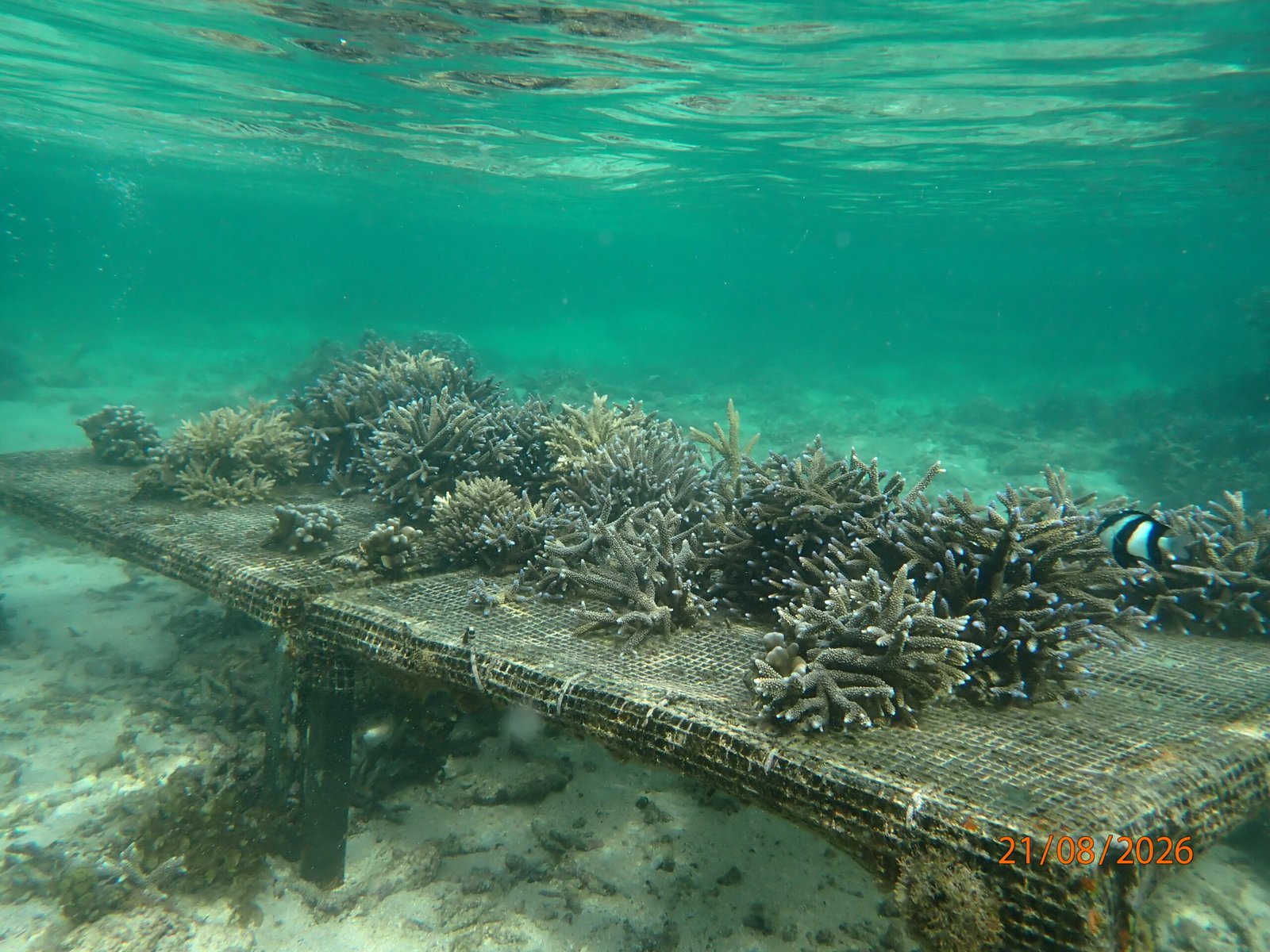
The coral nurseries at St Félix were established to provide a protected environment where coral fragments could recover, stabilise and grow before being used for reef restoration. Our latest monitoring visit revealed impressive development across the nursery tables. Many of the originally propagated branching corals have developed into large, complex colonies with extensive new branch formation. Several nursery sections now hold dense assemblages of living corals, demonstrating both continued survival and sustained growth under nursery conditions. The transformation is striking. What began as relatively small fragments is progressively becoming a stock of established coral colonies that can support future restoration activities. These nurseries therefore represent much more than temporary holding structures. They are becoming an important living repository of corals for the continued restoration of St Félix, providing material that can potentially be propagated further and used to progressively increase coral cover within degraded areas.
🪸 Transplanted corals are establishing on the reef
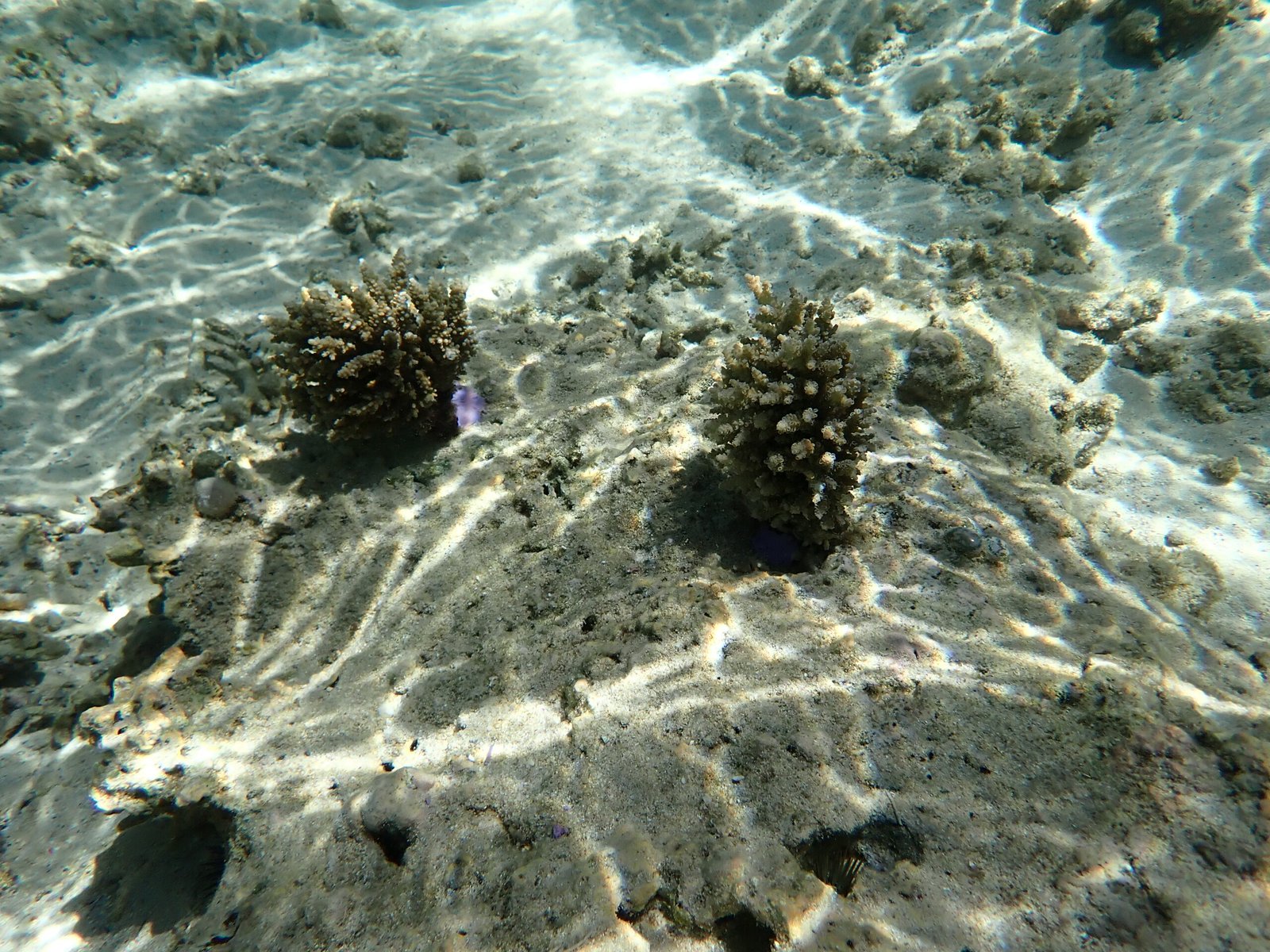
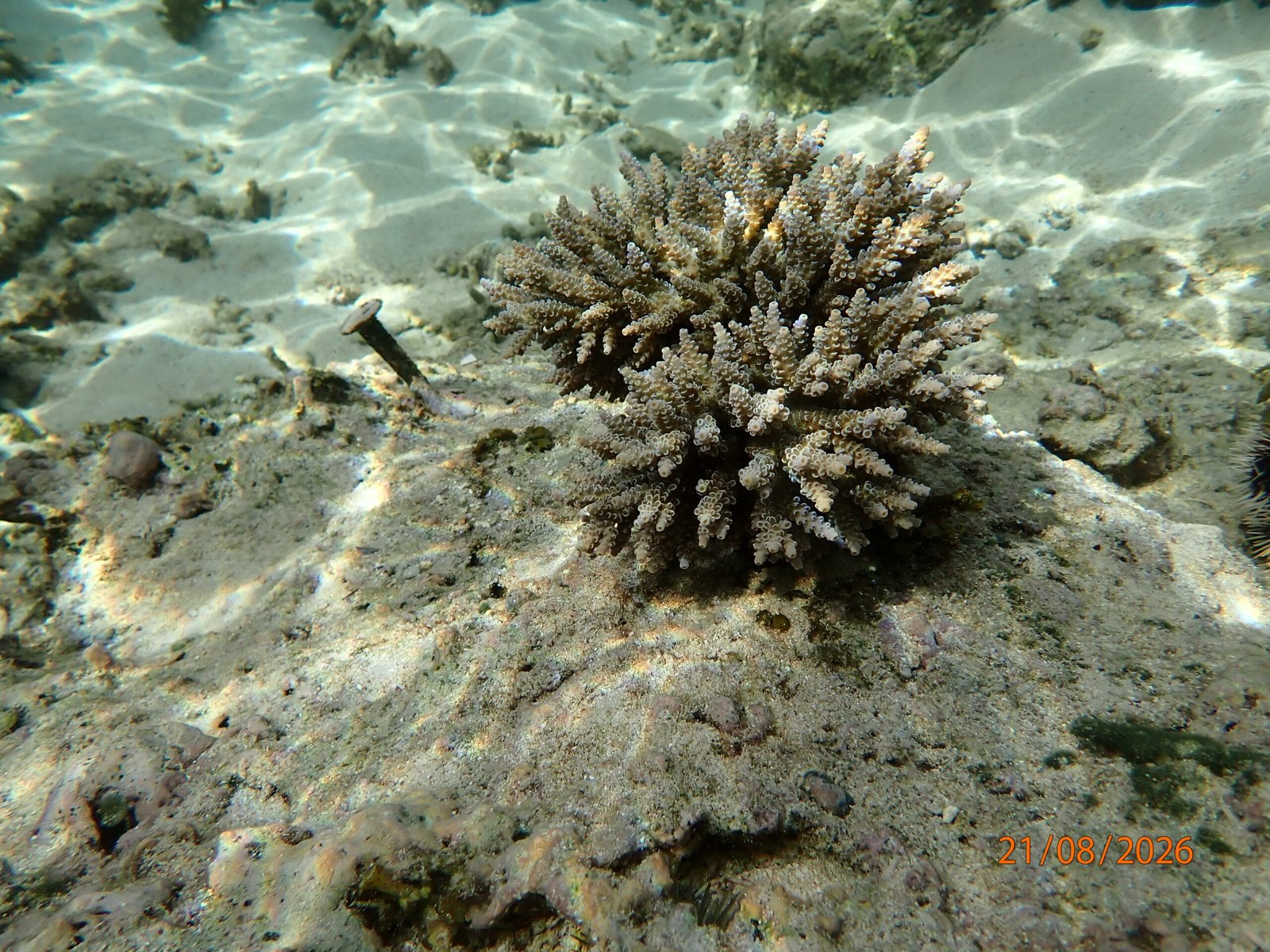
A major objective of the project was to test practical approaches for returning nursery-grown corals to degraded reef areas. Two approaches can now be clearly observed in the field: coral gardens established on spider-frame structures and direct transplantation onto the reef using the drilling technique. The results observed during our August 2026 monitoring visit are very encouraging.
Coral gardens on spider frames
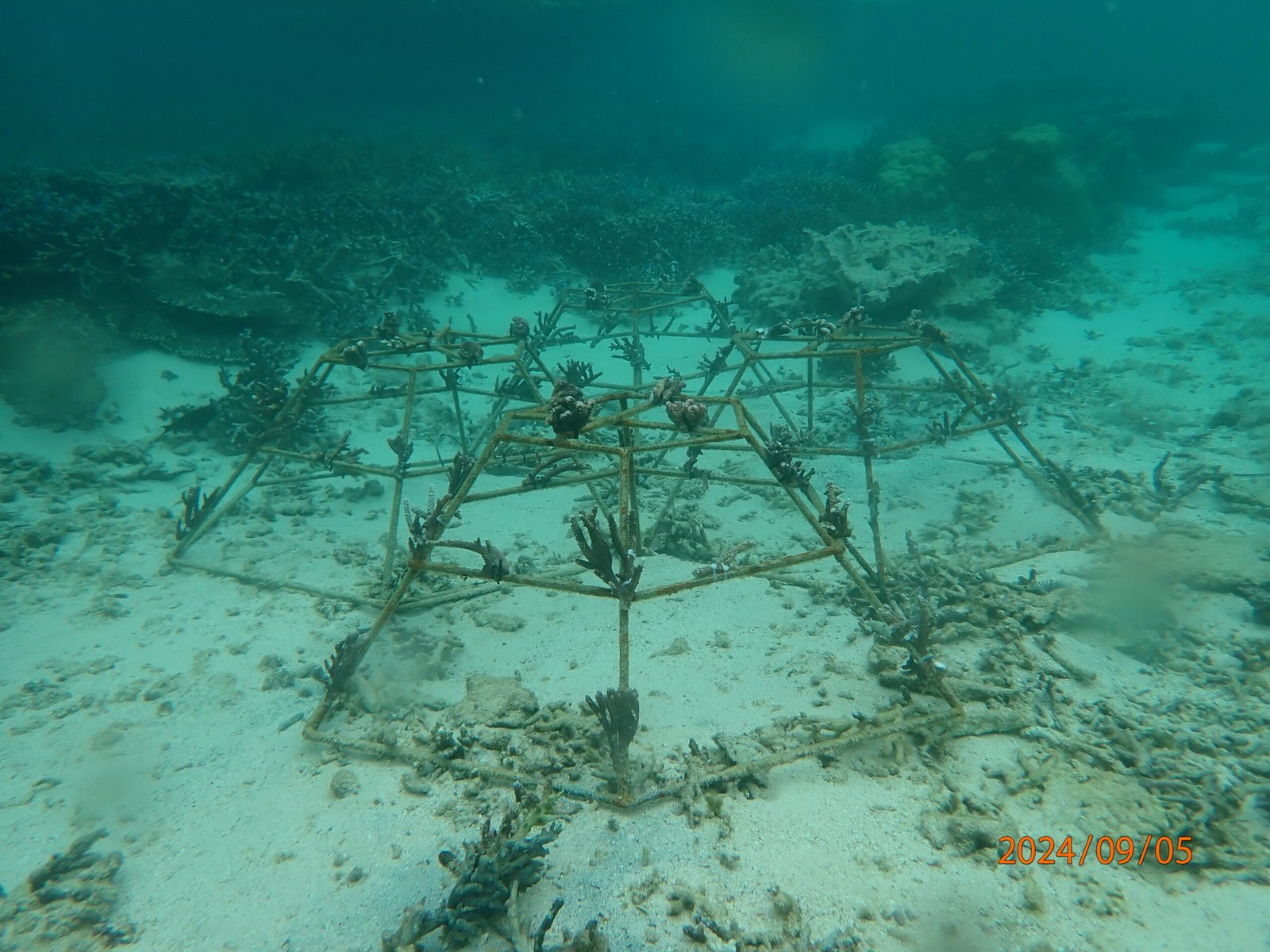
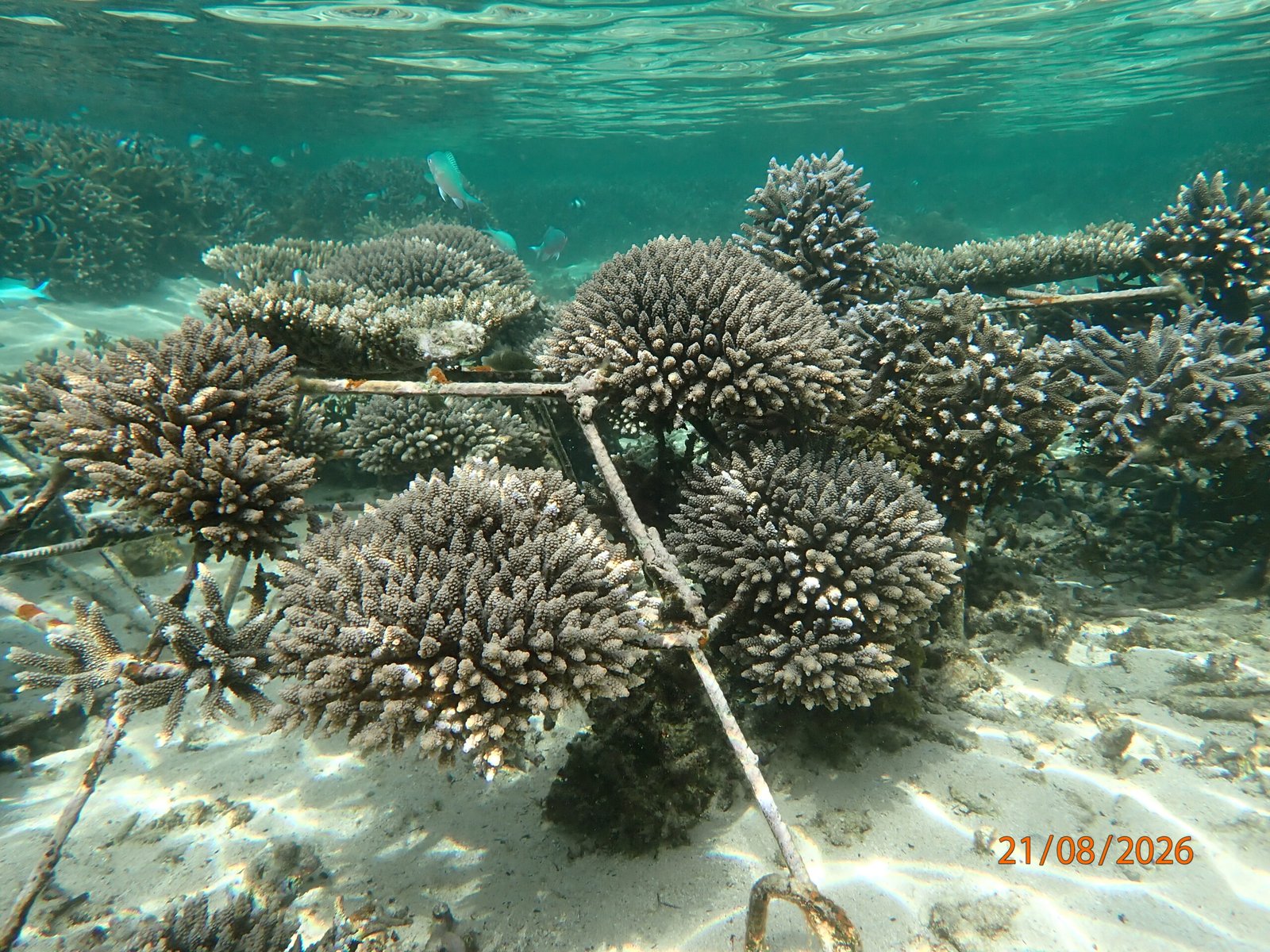
Many of the corals transplanted onto the spider frames have developed substantially since their initial placement. The structures are now supporting dense branching colonies, with corals progressively occupying the available space and increasing the structural complexity of the restoration sites. In several areas, it is becoming increasingly difficult to see the original restoration structure beneath the coral growth—a powerful visual indication of how far some of these colonies have developed. Fish were also readily observed around and amongst the restored coral structures during the monitoring visit, reinforcing the importance of structural coral habitat for the wider reef community.
Direct reef transplantation
Corals transplanted directly onto suitable reef substrate using drilled attachment points are also showing encouraging survival and development. Several colonies observed during the visit are now firmly established and have grown beyond the size at which they were originally transplanted. This is particularly important because direct transplantation allows corals grown within the nursery to become part of the natural reef structure without remaining dependent on an artificial frame. The continued survival and growth of these colonies demonstrate the potential of combining different restoration techniques depending on the condition and physical characteristics of each restoration site.
🌊 One of the most exciting observations: new coral recruits
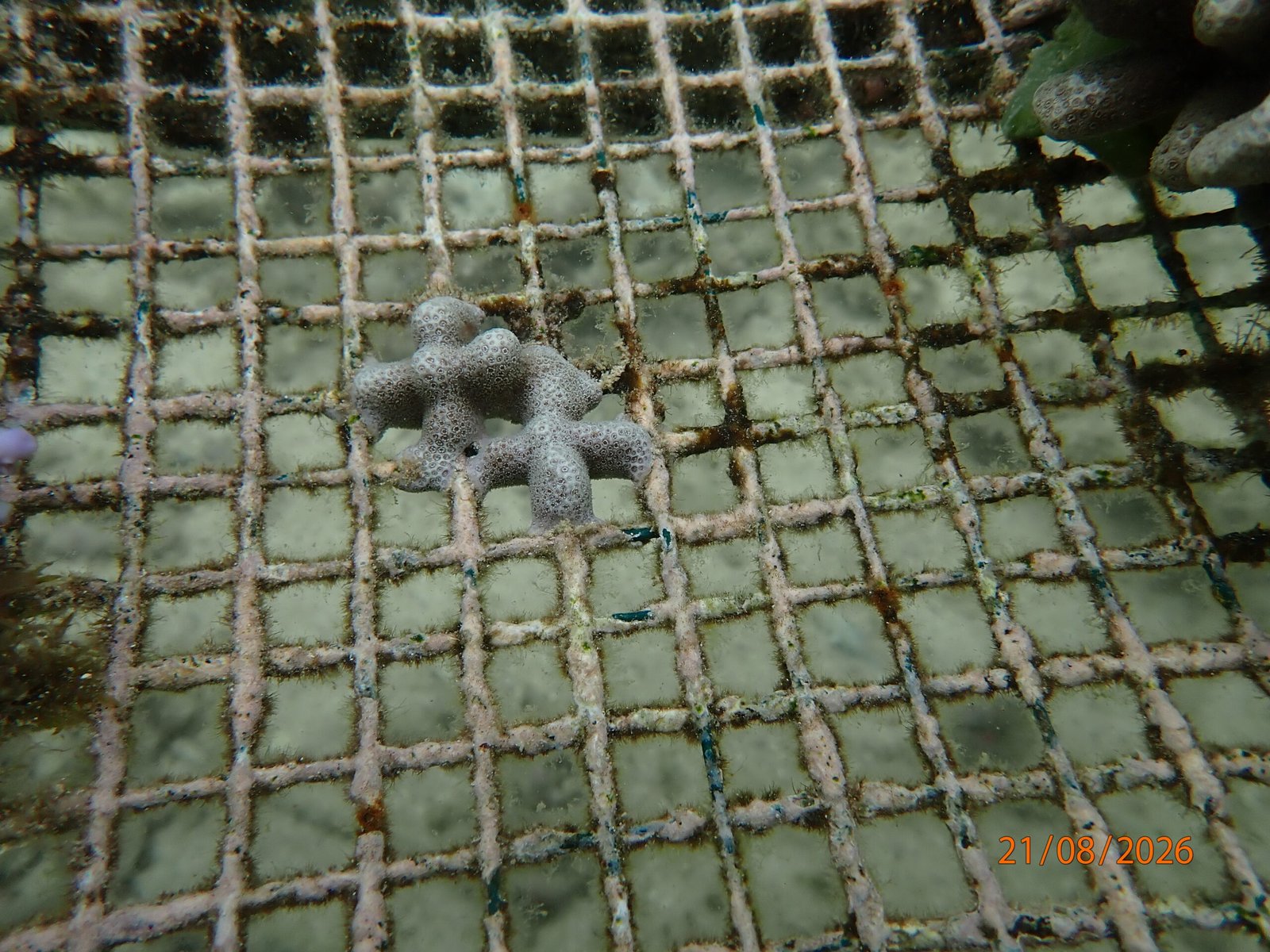
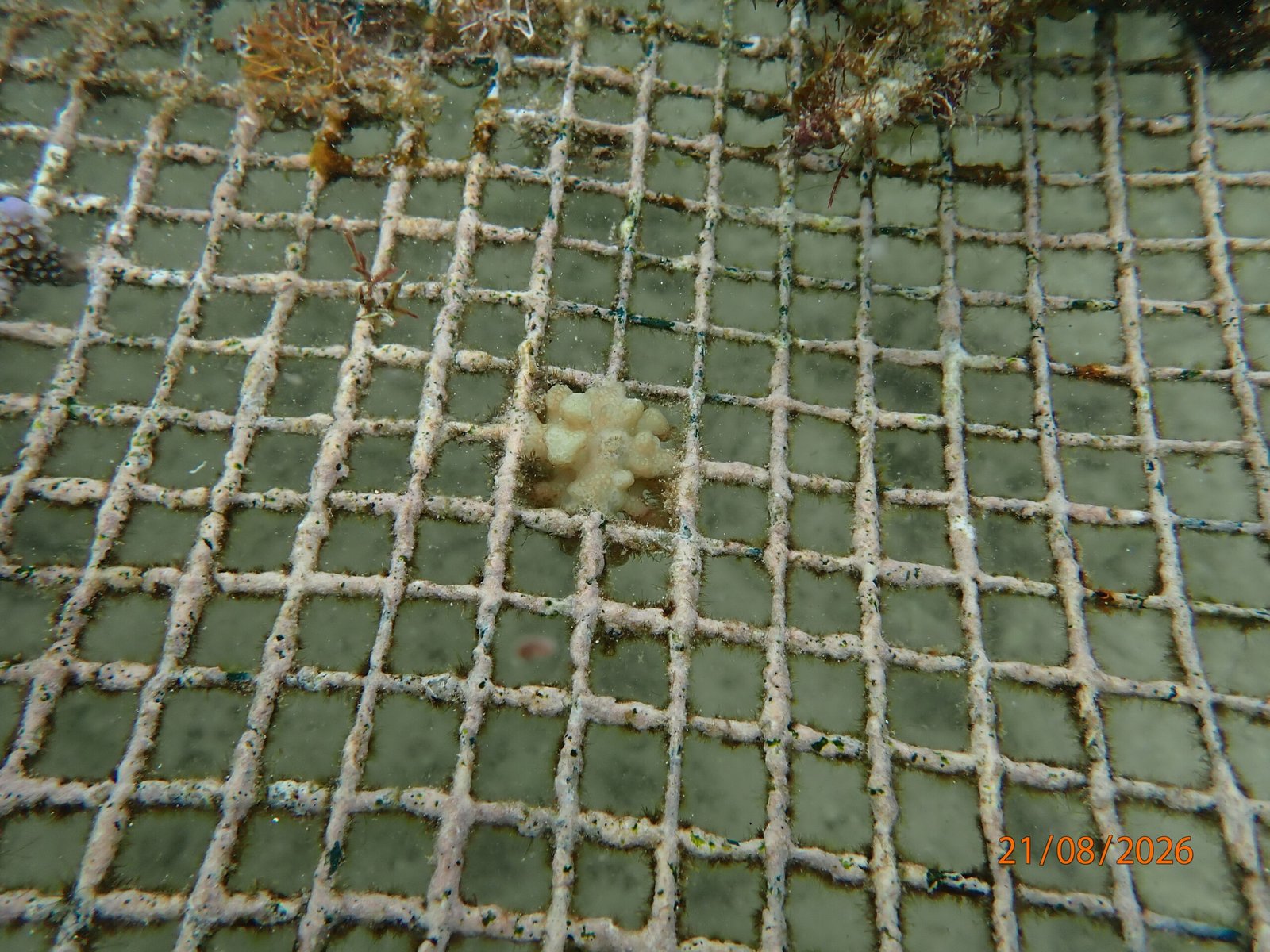
Perhaps one of the most encouraging discoveries during this monitoring visit was the presence of new juvenile coral recruits within the nursery area. Small young coral colonies can now be seen establishing directly on parts of the nursery infrastructure. These recruits were not manually transplanted onto those locations. Their presence indicates that natural coral recruitment is occurring within the nursery environment, adding another dimension to the ecological value of the restoration structures. While continued monitoring will be required to follow their survival and development, seeing a new generation of corals establishing within an area created for restoration is an especially rewarding result. Restoration is therefore no longer represented only by the corals that we initially placed in the water. New corals are beginning to appear within the restoration environment itself.
From restoration structures to living habitats
Successful coral restoration is not achieved simply when a coral fragment is attached to a nursery or reef. Success is a process. A fragment must survive. It must recover. It must grow. It must become securely established. And ultimately, the restored area should progressively regain the complexity and ecological functions associated with a living coral reef. The photographs from St Félix show that this process is well underway. The nursery tables are supporting increasingly developed coral colonies. The spider-frame gardens are becoming densely covered by living coral. Directly transplanted colonies are establishing on the reef. Reef fish are using the restored structures. And juvenile coral recruits are appearing within the nursery environment. Together, these observations provide a powerful picture of what sustained, hands-on reef restoration can achieve.
A project we are proud of...
At Coral Garden Conservation, we are immensely proud of the progress being observed at St Félix. Behind every coral nursery, every transplanted colony and every monitoring visit are many hours of underwater work, maintenance, observation and commitment. Coral restoration is not a one-time activity. It requires patience, regular monitoring, adaptive management and a long-term commitment to the reef. Seeing these corals growing today makes that effort worthwhile. The results also reinforce our belief in an approach that combines scientific restoration techniques, local capacity, continuous monitoring and community participation. Our ambition has always extended beyond planting individual corals. We want to develop restoration approaches that can help degraded reef areas recover progressively while building the local knowledge and capacity needed to care for them over the long term.
The journey continues...
This is an important milestone—but it is not the end of the project. Monitoring of coral growth and survival will continue. The new recruits observed within the nurseries will be followed to assess their development. Successful nursery colonies will provide opportunities for further propagation, while lessons from the spider-frame and direct-transplantation approaches will continue to guide future restoration activities. Every surviving colony matters. Every new branch represents growth. And every new coral recruit gives us another reason to remain hopeful about the future of our reefs.
From small rescued fragments to growing coral colonies and the appearance of a new generation of recruits, St Félix is showing us that restoration, when supported by sustained effort and long-term commitment, can create real and visible change.
We are proud of how far these corals have come—and even more excited about what comes next.
Coral Garden Conservation – Restoring reefs, strengthening communities and building resilience for the future.